The Mojave Dust Tax: Why Standard Commercial Vacuums Choke Clark County Facilities and Destroy Rooftop HVAC Units
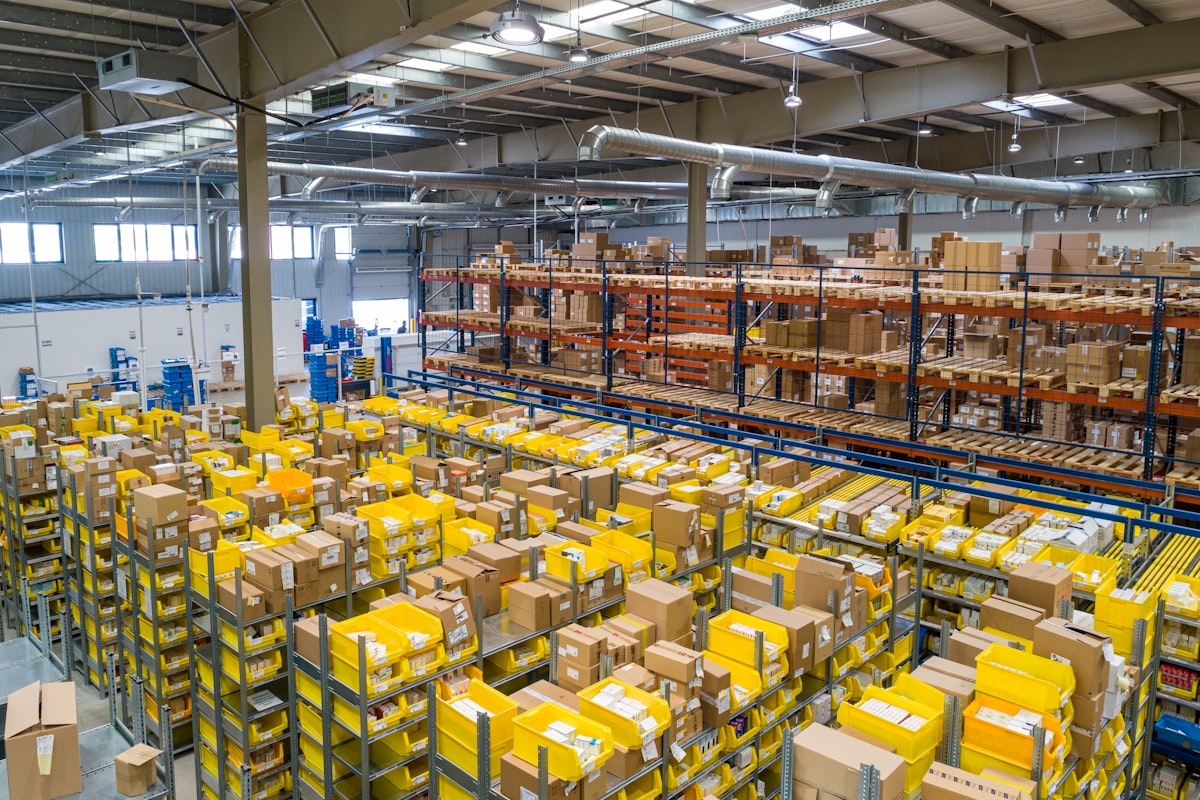
Heavy-Duty Warehouse Floor Scrubbing & High-Efficiency Desert Dust Extraction Protocols — Mayberry's Maids (702) 474-6243
The Invisible Overhead Draining Clark County Light Industrial Corridors
Drive down the industrial spines of Southern Nevada—from the dense flex parks along Post Road and Cameron Street to the trade-show fabrication hubs flanking Valley View and the logistics terminals of North Las Vegas—and you will observe an identical mechanical pattern. High-bay roll-up doors cycle open dozens of times per shift, admitting a relentless desert wind. Inside, precision CNC routers, edge-banders, and paint spray booths produce fine wood, composite, and acrylic particulate while building elaborate displays for the Las Vegas Convention Center and Mandalay Bay.
To clean these spaces, well-meaning operations managers frequently deploy commercial upright vacuums or standard single-stage shop vacs purchased at big-box supply houses. Within thirty days, those machines suffer motor burnouts, high-pitch bearing squeals, and fractured impeller fans. Worse yet, rooftop package HVAC units begin pulling excessive amperage, freezing evaporator coils, and driving utility bills into five-figure territory.
This phenomenon is what mechanical contractors and facility veterans call the Mojave Dust Tax. Understanding why standard vacuum infrastructure fails in Clark County requires examining the intersection of desert mineralogy, aerosol physics, and industrial mechanical engineering.
The Caliche Particle Physics: Why Off-the-Shelf Filtration Fails
The desert soil surrounding the Las Vegas valley is not benign garden loam; it is dominated by caliche—sedimentary rock composed of calcium carbonate bound with hard, highly angular micro-crystalline quartz silica. When desert soil is kicked up by dry thermal winds along the I-15 corridor, it fractures into micro-particulates ranging from 0.3 to 2.5 microns.
Standard commercial cleaning vacuums rely on porous cloth filter bags or basic paper media filters rated at 5 to 10 microns. When caliche dust enters these systems, three distinct failures occur simultaneously:
- Micro-Aerosolization: Particles smaller than 3 microns blow right through the porous filter media. Rather than capturing the dust, the vacuum's exhaust blower acts as a pressurized aerosol generator, suspending microscopic silica throughout the warehouse breathing zone.
- Impeller Blade Erosion: Caliche silica registers between 6.5 and 7 on the Mohs hardness scale. As these hard, razor-edged crystals slip past low-tier filters and impact high-speed plastic or aluminum motor impellers, they physically sandblast and abrade the mechanical components, inducing balance failure within weeks.
- Static Consolidation in Return Plenums: Once blown into suspension, these airborne particulates are drawn upward by the massive volume requirements of industrial air conditioning units. They settle across the wet, condensation-soaked evaporator coils, forming a calcified concrete-like crust that permanently strangles thermal heat transfer.
For specialized shops housing automated machinery, combining caliche with medium-density fiberboard (MDF) sawdust produces a hygroscopic particulate slurry that binds to horizontal surfaces, pneumatic lines, and electrical cabinet fan intakes. Mitigating this environment requires dedicated industrial warehouse floor scrubbing and sawdust extraction utilizing true multi-stage filtration.
The Engineering Remedy: 4-Stage HEPA and Surface Dwell Realities
Remediating high-particulate fabrication facilities demands a systems-level cleaning methodology engineered to counter desert dynamics:
1. 4-Stage True HEPA Closed-Loop Capture
True particulate capture demands equipment configured with four progressive filtration stages: a cyclonic primary separator for coarse saw cuttings, an open-weave Dacron secondary filter, an oversized micro-stator motor pre-filter, and a certified, individually tested absolute HEPA filter retaining 99.97% of particulates down to 0.3 microns. By sealing the exhaust pathway entirely, exhaust air returns to the facility cleaner than ambient background air, actively lowering the particulate burden on rooftop makeup air units.
2. Surfactant Dynamics and Contact Dwell Times
Caliche dust carries an alkaline surface charge that actively repels standard mop water, causing surface tension to push dust around rather than lifting it. Professional remediation requires specialized non-foaming industrial detergents applied via high-downpressure walk-behind scrubbing decks. These chemical formulations require a strict wet-contact dwell time of 7 to 10 full minutes to chemically hydrate and break the electro-static bond of calcium carbonate before dual squeegee vacuum extraction vacuums the slurry into dedicated containment tanks.
3. Dedicated W-2 Security and Operational Continuity
Light industrial and exhibit builder spaces contain trade-secret booth layouts, high-value tooling, and sensitive intellectual property scheduled for public debut at major expos. Using unvetted day-labor or transient 1099 sub-crews introduces unacceptable security, liability, and inventory shrinkage risks. Cleanliness infrastructure must be executed exclusively by rigorously background-checked, insured, and uniformed W-2 personnel operating under documented standard operating procedures (SOPs).
"Standard janitorial tools simply cannot cope with Clark County caliche. If your cleaning program does not isolate particulate below one micron, your HVAC system becomes your vacuum cleaner—and the coils pay the ultimate price."
The 5-Minute Nighttime Diagnostic Rubric for Facility Managers
You do not need an air-quality laboratory to verify if your light industrial facility is falling victim to the Mojave Dust Tax. Walk your operations floor tonight after the second shift clocks out and perform this 4-point diagnostic self-audit:
- The Return Air Grille Wipe: Inspect the primary return air register of your office or shop-floor HVAC unit. Run a gloved finger along the interior louvers. If the residue is chalky, gray, and gritty (rather than light, gray lint), your vacuuming process is bypassing filters and exhausting silica directly into your air handlers.
- The Beam-Top Slag Profile: Climb a safety ladder to examine the horizontal flange of an eye-level structural I-beam or warehouse pallet rack. If sawdust has formed a dense, compact cake exceeding 1/8-inch thickness, the ambient relative humidity combined with fine caliche has cemented the particulate, turning overhead structural members into combustible dust hazards.
- The Exhaust Plume Beam Test: Turn off high-bay lighting and shine a high-lumen tactical flashlight directly across the exhaust port of your current commercial cleaning vacuum while it runs. If a brilliant conical beam of sparkling dust reflects in the light beam, that machine is an aerosolizer, not an air-remediation tool.
- The Concrete Pinhole Inspection: Inspect the bare concrete paths adjacent to your CNC cutting zones. If concrete looks perpetually cloudy and displays micro-rings of gray sludge in the pores despite daily mopping, your floor process lacks the chemical dwell time and vacuum lift required to pull mineral suspended solids from the slab.
Protecting Clark County Light Industrial Assets for 35+ Continuous Years
Managing a productive manufacturing, fabrication, or distribution facility in the Mojave Desert requires specialized environmental defense. Since 1989, Mayberry's Maids has served as Southern Nevada's operational partner for deep commercial facility sanitation and particulate mitigation protocols.
Operating from our central hub in 89103, our team understands the exact physical challenges created by Clark County's unique geology and heavy industrial zoning. We do not provide one-size-fits-all checklists or guess at facility needs over the phone.
Stop allowing abrasive caliche and wood particulate to erode your capital investments and HVAC life spans. Contact Gil directly to schedule a complimentary 15-minute on-site walkthrough inspection of your facility. Call (702) 474-6243 or email sales@wecleanlasvegas.com to examine your floor, air, and particulate profiles with Clark County's longest-standing commercial maintenance specialists.

Comments
Post a Comment