The Anatomy of a Low-Ball Janitorial Bid: What Las Vegas Property Managers Pay for Disguised Overhead
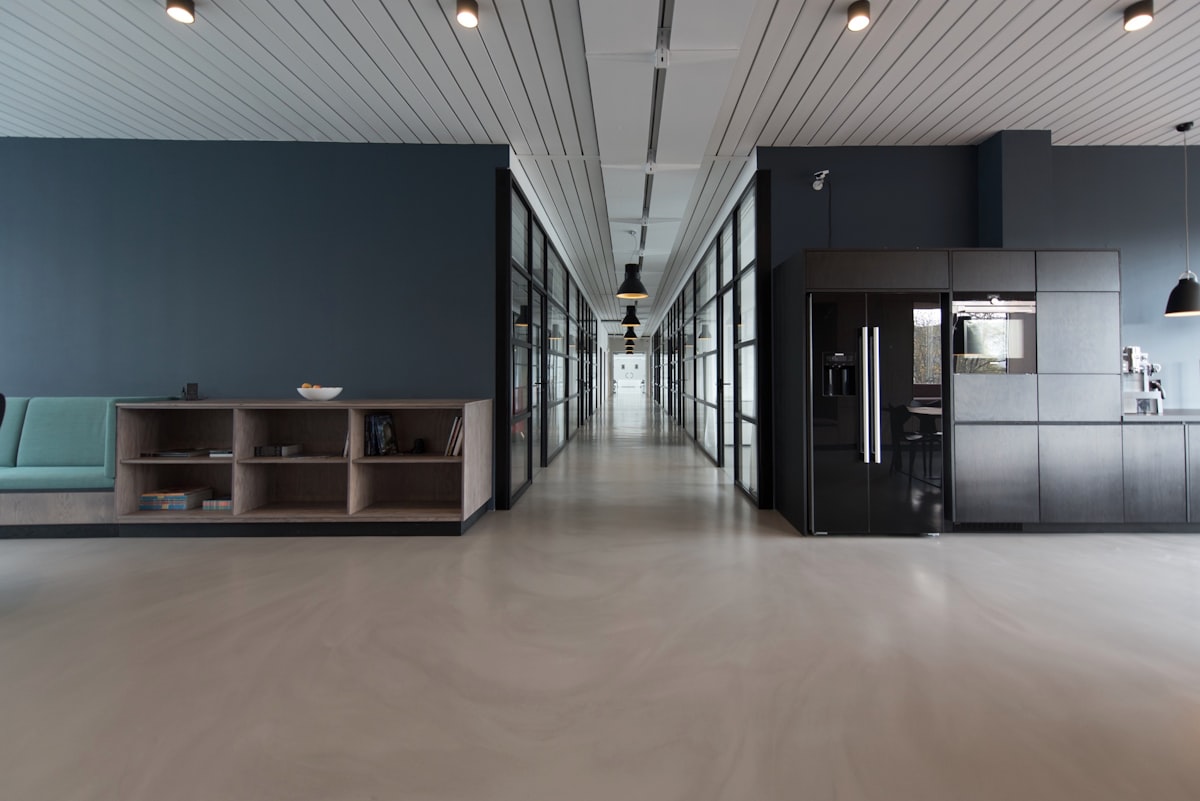
Professional Nightly Corporate Office Detailing & Microfiber Sanitization in Clark County — Mayberry's Maids (702) 474-6243
In commercial real estate procurement across the Sunset corridor, Dean Martin Drive, and the corporate centers of Summerlin West and Spring Valley, facility directors are consistently confronted with an operational paradox: bids for routine nightly office detailing that diverge by as much as forty to fifty percent. When spreadsheets rule procurement, the temptation to award facilities contracts to bottom-tier bidders is intense. However, decades of commercial asset management in Clark County reveal an immutable operational rule: in commercial janitorial services, you do not eliminate operating costs by accepting a low bid—you merely transfer those costs into accelerated asset depreciation, HVAC strain, and premises liability.
The Mathematical Physics of the 'Ghost Crew' Deficit
Commercial cleaning is an operation driven almost entirely by labor-time allocation, chemical kinetics, and mechanical filtration efficiency. When a low-ball contractor submits a bid that undercuts established market standards, that contractor cannot negotiate down the statutory costs of state worker’s compensation, payroll taxes, or insurance bonding. To turn a margin, they are forced to execute three structural operational cuts: slashing labor hours to mathematically impossible thresholds, switching to untrained 1099 independent sub-crews, and replacing industrial-grade equipment with consumer-grade hardware.
When a cleaner is allotted only 45 seconds per private office suite rather than the required four to six minutes of detailed environmental hygiene, systemic failures occur immediately. What appears clean under fluorescent lights at 7:00 AM is frequently an ecological hazard by noon.
The Mojave Factor: Caliche Silica Dust and 4-Stage HEPA Filtration
Southern Nevada presents a specific geological challenge that national cleaning templates fail to accommodate: caliche and ambient desert silica particulate. Airborne desert dust blown in through thermal cycling and foot traffic is not benign soft organic matter; it is composed of sharp, abrasive micro-crystals of calcium carbonate and quartz.
Sub-tier cleaning operations rely on cheap, single-stage upright vacuum cleaners or electrostatic dry-dusting wands. Mechanically, these devices act as particulate centrifuges: they capture large grit in an open-weave bag while aerosolizing ultra-fine silica particles under 2.5 microns directly back into the office breathing zone. Over a six-month period, these aerosolized abrasives settle inside high-efficiency terminal variable air volume (VAV) boxes, foul delicate HVAC coils, and permanently haze expensive low-emissions architectural glazing.
Professional commercial office cleaning in Las Vegas requires closed-loop, 4-stage HEPA filtration extraction systems operating at true 99.97% efficiency down to 0.3 microns. By capturing microscopic caliche dust rather than recirculating it, certified HEPA backpack vacuuming prevents the premature abrasive degradation of commercial nylon carpeting and dramatically reduces building-wide air handling static pressure.
The Chemistry of Failure: Wet Contact Dwell Times vs. Rapid Wiping
Perhaps the most severe liability engineered by budget cleaning services occurs in chemical deployment. Disinfection is not instantaneous; it is a biochemical reaction governed by contact dwell time. Hospital-grade quaternary ammonium compounds (quats) and accelerated hydrogen peroxide solutions universally require wet dwell times ranging between three and ten continuous minutes on non-porous surfaces to neutralize vegetative bacteria, norovirus, and bloodborne pathogens.
Under the compressed timelines of a low-ball contract, janitorial personnel execute what infection control specialists call 'the illusion of clean': a worker mist-sprays a microfiber towel with unmeasured, over-diluted neutral cleaner and rapidly wipes down thirty consecutive desks, keyboard interfaces, and breakroom fixtures without re-wetting or allowing surface saturation. This practice does not sterilize; it functions as a mechanical mechanical vector, picking up bacterial colonies from one workstation and uniformly spreading them across an entire executive suite.
The Premises Liability Gap: W-2 Security vs. Subcontracted 1099s
For operations managers overseeing sensitive environments along the I-215 beltway or high-density creative suites off Dean Martin Drive, security breaches and liability non-compliance represent catastrophic enterprise risks. Low-cost cleaning operations regularly rely on informal, subcontracted 1099 laborers who undergo zero background vetting, carry no direct workers’ compensation coverage under the parent entity, and lack documented chain-of-custody protocols for master keycards and biometric office access.
True operational risk mitigation mandates direct, rigorously screened, uniformed W-2 employees who are trained in strict building envelope security, key control integrity, and universal hazardous communication standards (HAZCOM/GHS). When a cleaning crew possesses a direct, accountable employment relationship, access discipline remains uncompromised.
"Cutting commercial janitorial costs by twenty percent typically yields a forty percent increase in long-term facility capital expenses. Cleanliness in a desert commercial building is an engineering discipline, not a cosmetic sweep."
The 5-Minute Property Manager Self-Audit Rubric
Facility managers do not need specialized chemical assay equipment to discover whether their current service provider is cutting operational corners. You can execute this rapid four-point diagnostic audit in your commercial property tonight in under five minutes:
- The High-Zone Return Grille Check: Run a white glove or damp lint-free cloth along the louvers of your ceiling HVAC return vents. If you discover a greasy, felt-like accumulation of dark gray particulate, your vendor is using exhausted, non-HEPA vacuums that are actively aerosolizing floor dust into your ventilation infrastructure.
- The Conference Table Specular Reflection Test: Crouch down and look horizontally across your polished boardroom table against natural or overhead light. A streaky, cloudy film indicates two critical failures: chemical cross-contamination from unrinsed, dirty mop water or towels, and the total absence of a dedicated microfiber color-coding protocol.
- The Restroom Baseboard Hydrophobic Assessment: Inspect the floor-to-wall grout joints behind commodes and partition legs. Persistent foul odors combined with darkened, yellowed grout lines are definitive proof of 'mop-and-bucket slurry accumulation'—where dirty floor water is continually pushed into porous grout rather than extracted with clean-solution neutralizers.
- The Chemical Dispenser Inspection: Look inside your building's janitorial utility closet. If you see unlabelled secondary trigger bottles, generic consumer-brand jugs purchased from big-box retailers, or mops resting head-down inside gray water reservoirs, your facility is actively out of compliance with OSHA Safety Data Sheet (SDS) federal requirements.
Preserving Clark County Commercial Assets with Precision Detailing
Since 1989, Mayberry's Maids has maintained an uninterrupted institutional standard across Clark County under the direct ownership of Gil. With more than thirty-five continuous years serving Nevada’s premier corporate workspaces, medical facilities, and commercial complexes, we understand that structural maintenance requires uncompromising protocol, certified equipment, and direct labor accountability.
Stop subsidizing low-bid janitorial shortcuts with your facility's operating integrity and long-term capital budget. We invite building owners, asset managers, and facility directors to contact Gil directly to schedule a complimentary, comprehensive 15-minute on-site walkthrough inspection. Call our central office at (702) 474-6243 or email our administrative team at sales@wecleanlasvegas.com to baseline your property's real operational health today.

Comments
Post a Comment