The Anatomy of a Low-Ball Bid: What Discount Janitorial Services Cut Across Clark County Commercial Portfolios
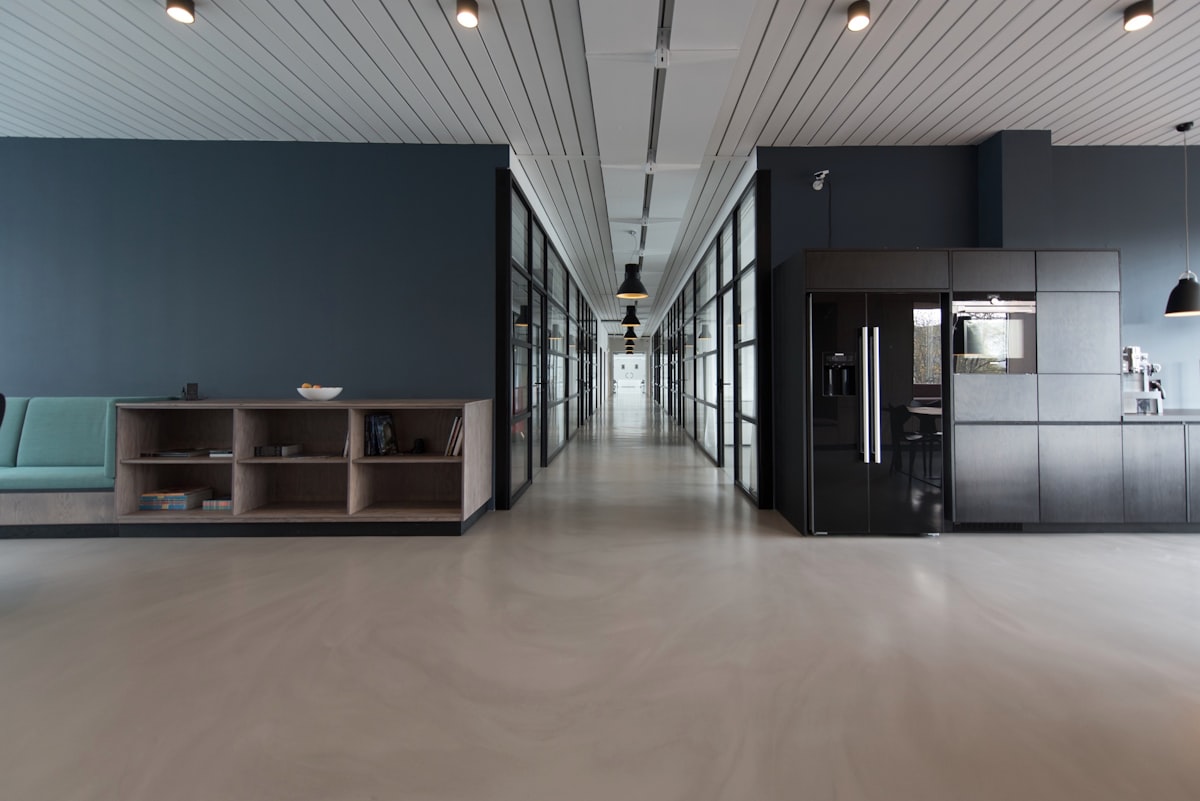
Professional Nightly Corporate Office Detailing & Microfiber Sanitization in Clark County — Mayberry's Maids (702) 474-6243
In commercial asset management along the Sunset corridor, Dean Martin Drive, and the corporate centers of Summerlin West, procurement teams face intense pressure to trim operational line items. When facility contracts go out to tender, janitorial proposals often reveal a startling spread: established operators clustered within a realistic band of labor and burden, accompanied by one or two extreme outliers undercutting the median by thirty to forty percent.
For a building manager evaluating overhead, that low-tier proposal looks like fiscal stewardship. In industrial physics and labor economics, however, it represents something far more hazardous: deferred mechanical maintenance, compromised chain of custody, and superficial hygiene masquerading as sanitation. After 35 continuous years auditing facilities across Clark County at Mayberry's Maids, our operational team has documented the compounding, hidden balance-sheet costs that predatory low-ball contracts inevitably generate.
1. Caliche Silica Dust and Commercial Mechanical Decay
Southern Nevada presents a punishing atmospheric profile. The Las Vegas Valley sits atop dense sedimentary caliche layers, rich in calcium carbonate and sub-micron crystalline silica. As ground winds channel through Spring Valley and along the I-215 beltway, this particulate infiltrates commercial building envelopes, settling onto high-traffic luxury vinyl tile (VCT), broadloom carpet fibers, and commercial return registers.
Low-margin janitorial outfits survive on rapid transit rates—pushing crews to clear upwards of 6,500 square feet per labor hour. To achieve this speed, contractors equip staff with residential-grade upright vacuums featuring cheap porous collection bags, or worst of all, traditional feather dusters that merely aerosolize settled silica into the HVAC airstream. Instead of extraction, abrasive particulate matter gets redistributed onto architectural finishes. Micro-scratches destroy commercial floor sealants within months, forcing premature strip-and-wax restoration cycles, while unmanaged particulate chokes secondary HVAC filtration, driving up tenant energy expenditures.
True mitigation requires true commercial engineering: multi-stage, sealed HEPA filtration vacuums capturing 99.97% of particulates down to 0.3 microns, paired with electrostatically charged micro-denier split microfiber split to less than 3 microns wide to physically trap mineral crystal structures rather than dispersing them.
2. The Dwell Time Fiction and Biofilm Propagation
Disinfection is an exact chemical equation governed by surface chemistry, concentration, and contact duration. Every hospital-grade quaternary ammonium compound (quat) and phenolic disinfectant registered with the EPA requires an uninterrupted wet dwell time—typically between four and ten minutes—to neutralize pathogens such as norovirus, MRSA, and influenza strains.
When a cleaner sprays a common-area boardroom credenza or restroom flush valve and wipes it dry four seconds later, the disinfectant efficacy is effectively zero. In fact, that rapid dry-wiping simply spreads bacterial colonies across non-porous surfaces.
Low-ball contractors quote staffing hours that mathematically forbid compliance with manufacturer dwell times. If an operative is allocated ninety seconds to sanitize an eight-fixture executive restroom, chemical dwell times are the first protocol abandoned. The result is invisible: high-touch vector surfaces become cross-contamination superhighways for corporate tenants, directly increasing tenant sick leave and eroding building leaseholder satisfaction.
3. Subcontracting Arbitrage vs. Secure Chain of Custody
How does a contractor bid half the going rate for Class-A office footprints? Almost universally through 1099 independent contractor arbitrage. Low-cost vendors regularly broker master agreements and slice the nightly labor into unvetted, unmonitored third-party subcontracts.
This creates acute vulnerability for medical practices, legal chambers, and financial suites across Spring Valley and the Dean Martin industrial park:
- Unvetted Building Access: Facilities housing proprietary client records or high-value physical hardware are accessed by revolving-door crews who have bypassed rigorous seven-year background screenings.
- Insurance Deficits: 1099 subcontractors rarely carry adequate statutory workers' compensation or inland marine commercial liability coverage, exposing the master property owner to third-party tort claims if an injury occurs on-site.
- Zero Operational Uniformity: Without uniform W-2 personnel management, safety data sheet (SDS) compliance collapses, chemical dilution ratios are improvised, and keycard protocols deteriorate.
Securing high-tier assets mandates disciplined, fully employed W-2 technicians managed under direct supervisory oversight—the strict operational posture required for dependable commercial office cleaning in Las Vegas.
The 5-Minute Nighttime Diagnostic Audit
Property managers do not need a laboratory swab to determine whether their current janitorial service is cutting corners. Walk your premises tonight after the cleaning crew logs off and evaluate these four critical checkpoints:
- The Overhead Register Inspection: Run an index finger along the inner lip of the supply and return air diffusers in your main hallway. If you lift a greasy, grey felt of mineral dust, your cleaning team is not performing HEPA-damp extraction, and particulate is constantly circulating through your tenant air supply.
- The Restroom Grout and Floor-Cove Creep: Examine the 90-degree intersection where floor tiles meet baseboards behind restroom commodes. A yellowed, waxy perimeter line indicates dirty-mop slop-off—evidence that cleaners are pushing contaminated greywater into porous edges rather than utilizing clean-water rinse extraction.
- The Baseboard Impact and Edge Accumulation: Check the corners of low-pile carpet runs along perimeter walls. Heavy, dark lint lines reveal improper edging; the vacuum operator is staying in the open center lanes to preserve speed and skipping wand-detail edge passes.
- Janitorial Closet Chemical Inspection: Open the on-site janitorial utility closet. If you discover unlabelled jugs, mismatched spray bottles lacking OSHA-mandated secondary GHS labels, or soaked cotton string mops standing inverted in foul bucket water, your facility is exposed to regulatory fines and cross-contamination hazards.
Engineering Asset Value with Mayberry's Maids
Routine commercial cleaning is not a superficial commodity; it is preventative asset preservation and risk mitigation. When janitorial tenders sacrifice labor hours and scientific protocols to present an artificially low price, the building owner ultimately foots the invoice through resurfacing costs, tenant churn, and security vulnerabilities.
For thirty-five continuous years, Mayberry's Maids has maintained Clark County corporate environments through rigorously vetted, W-2 staff trained in chemical dwell physics and advanced particulate containment. We do not participate in race-to-the-bottom bidding wars that force operational neglect.
If you suspect your current janitorial contractor is under-delivering on your baseline scope, elevate your building standards today. Contact Gil directly to schedule a complimentary 15-minute on-site walkthrough inspection of your facility. Call (702) 474-6243 or email sales@wecleanlasvegas.com to examine your floor-care profile, assess your square-footage operational metrics, and restore the integrity of your property.

Comments
Post a Comment