The Mojave Dust Tax: Why Standard Commercial Vacuums Choke in Nevada and Damage Your HVAC System
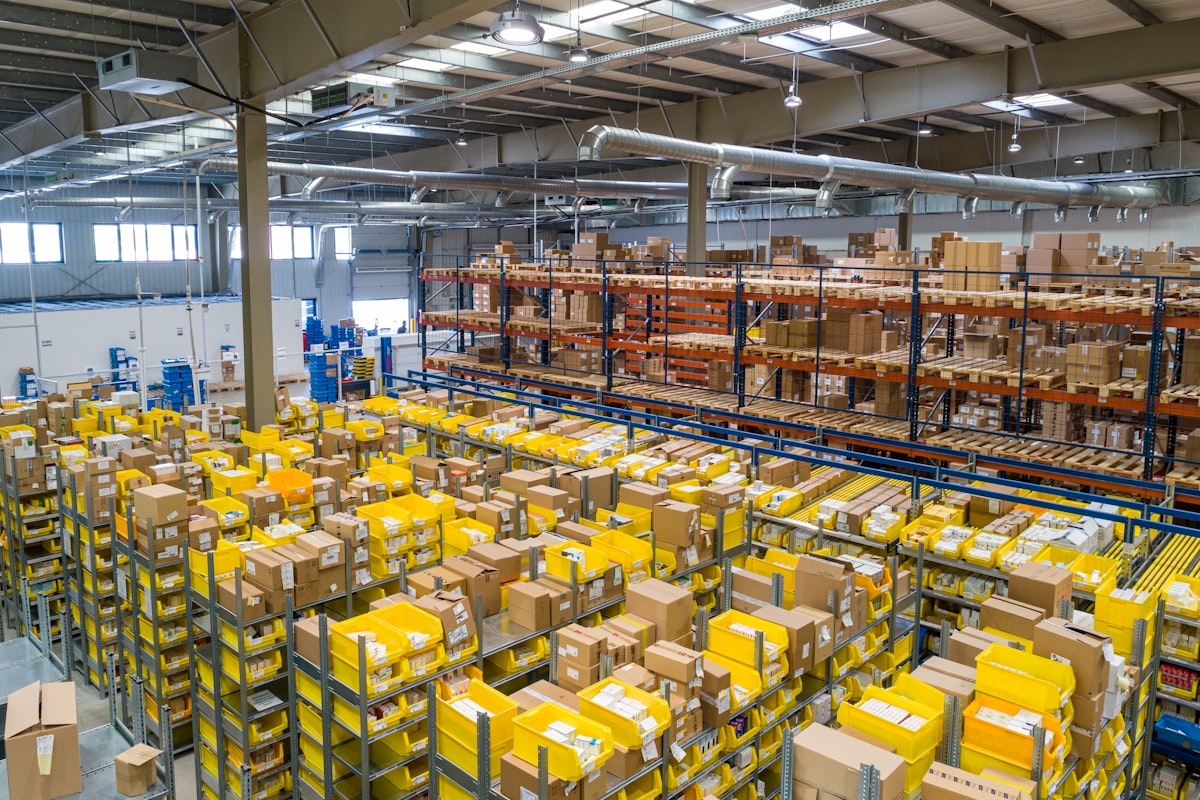
Heavy-Duty Warehouse Floor Scrubbing & High-Efficiency Desert Dust Extraction Protocols — Mayberry's Maids (702) 474-6243
Across the primary light industrial corridors of the Las Vegas Valley—from the fabrication clusters along Post Road and Cameron Street to the expansive staging compounds of Valley View and North Las Vegas Industrial—facility managers face an invisible, balance-sheet-eroding adversary. We call it the Mojave Dust Tax.
For exhibit builders, trade show staging facilities, and light manufacturing plants, airborne particulate is routinely treated as a minor cosmetic nuisance handled with off-the-shelf single-stage commercial shop vacuums or retail janitorial uprights. This operational oversight is catastrophic. In the arid basin of Clark County, dust is not merely degraded organic matter or common soil; it is an aggressive, chemically alkaline compound dominated by caliche silica that systematically destroys filtration media, compromises warehouse mechanical systems, and forces rooftop HVAC economizers into premature failure.
The Physics of Caliche Silica Dust vs. Off-the-Shelf Vacuums
To understand why standard janitorial equipment chokes in Southern Nevada, one must examine the geology of the Las Vegas basin. Much of our local subsoil is composed of caliche—a concrete-like sedimentary deposit formed when calcium carbonate bonds with silt, clay, and micro-crystalline silica. When heavy vehicular traffic, forklift maneuvers, and material handling grind this material down, it fractures into micro-particulates ranging from 0.5 to 5 microns in size.
Silica carries a Mohs hardness rating of 7. When sucked into an ordinary commercial vacuum equipped with a standard single-stage paper cartridge or generic cloth bag (typically rated no finer than 10 to 30 microns), two structural failures occur instantaneously:
- Filter Media Blinding: Caliche’s microscopic, angular edges embed deeply into porous cellulose fibers. Within minutes, air intake velocity drops by up to 60%, causing vacuum motors to run hot, lose essential lift, and fail under thermal stress.
- The Aerosolization Bypass: Particulates smaller than 10 microns bypass the filter media entirely. Rather than being captured, ultra-fine crystalline silica is discharged directly back into the warehouse breathing zone at high velocity, remaining suspended in ambient air currents for hours.
The Chain Reaction: How Escaped Dust Destroys Rooftop Package Units
Once caliche dust is aerosolized by inferior vacuum equipment, the facility’s commercial HVAC infrastructure becomes the involuntary filtration system. In high-bay facilities housing exhibit builders—where fine timber, MDF, and laminate sawdust mix with incoming desert grit—the mechanical toll escalates rapidly.
Negative pressure generated by high-volume warehouse ventilation pulls aerosolized particulate upward. As return air cycles across rooftop economizers and evaporator coils, moisture from localized condensation encounters the calcium carbonate and silica. The dust solidifies, forming a cementitious thermal blanket across the coil fins.
A mere 0.042-inch accumulation of dirt on an industrial cooling coil can reduce thermal heat transfer efficiency by more than 21%, dramatically driving up compressor amp draws and leading to frozen line sets in the peak of a 115-degree July heatwave.
Furthermore, the abrasive silica acts as a micro-sandblaster against blower wheel bearings, damper actuators, and duct lining, accelerating mechanical wear and triggering emergency rooftop capital expenditures that could have been completely avoided with engineered extraction.
Engineered Extraction Protocols: True 4-Stage HEPA and Wet Chemistry
Remediating industrial dust in the desert environment requires containment engineering, not cosmetic sweeping. At Mayberry's Maids, our 35-year operational footprint in Clark County has established strict mitigation protocols for exhibit production spaces and industrial warehouses:
1. 4-Stage HEPA Filtration with Continuous Air Washing
Industrial dust remediation demands sealed critical-containment vacuums featuring certified 4-stage HEPA filtration. These units operate through cyclonic drop-out chambers, secondary poly-blended pre-filters, and tertiary micro-mesh screens, culminating in a certified H14 HEPA stage that traps 99.97% of particulates down to 0.3 microns. Internal pulse-jet cleaning prevents caliche cake-over without releasing plume blow-by into the plant air.
2. Chemical Dwell Times and Wet Extraction
Dry sweeping is categorically prohibited in regulated industrial environments due to OSHA crystalline silica exposure thresholds (29 CFR 1910.1053). Airborne dust must be converted into a manageable semi-liquid slurry using targeted neutral surfactants. Critical to this process is respecting wet chemical contact dwell times—allowing wetting agents a minimum 10-minute continuous saturation window to encapsulate micro-silica particles at the slab surface before mechanical scrubbing commences.
Deploying specialized industrial warehouse floor scrubbing and sawdust extraction machinery ensures that caliche, sawdust slurry, and polymer residues are chemically suspended and immediately extracted into sealed recovery tanks, completely eliminating mechanical transfer into your HVAC air return stream.
The 5-Minute Industrial Facility Self-Audit
Facility directors across Post Road and Cameron Street can evaluate their exposure to the Mojave Dust Tax tonight using this straightforward 4-point rubric:
- The Return Grille Smear Test: Run an index finger across the louvers of your lowest HVAC return intake. If the residue feels chalky, gritty, and gray-white (caliche) rather than soft and fibrous (ambient lint), abrasive silica is currently bypassing your floor vacuums and circulating through your rooftop compressors.
- The Flashlight Exhaust Cone Test: In a dark corner of the shop, aim a high-lumen flashlight across the exhaust port of your current commercial vacuum while operating. If you see a distinct cone of shimmering micro-dust ejecting into the beam, your filtration media has failed and is actively contaminating your facility.
- The Threshold Friction Check: Inspect the transition slab inside your primary roll-up doors. Rub a shoe sole firmly across the concrete. A fine, talc-like sliding sensation indicates micro-fines are packed deep into the concrete's open pores, ready to be ground into airborne dust by oncoming forklift traffic.
- Air Handler Static Pressure Variance: Check your building automation system or differential pressure gauges across your primary filter racks. A premature spike in pressure differential within 30 days of filter installation confirms elevated, uncontrolled indoor particulate loading.
Institutional Chain of Custody: Direct W-2 Workforce
Light industrial and exhibit fabrication facilities house mission-critical intellectual property: custom trade show components, proprietary client designs, and delicate electrical payloads destined for the Las Vegas Convention Center. Contracting with third-party gig networks or app-brokered cleaning crews introduces severe security and operational liability.
Every commercial project deployed by Gil and the team at Mayberry's Maids is executed by rigorous, background-checked, uniformed W-2 technicians trained under OSHA general industry standards. We preserve the integrity of your production footprint while delivering absolute physical plant protection.
Schedule a 15-Minute Facility Walkthrough with Gil
Stop paying the hidden Mojave Dust Tax through reduced equipment life, compromised indoor air quality, and premature HVAC compressor burnout. We invite plant managers, shop foremen, and commercial property owners to arrange a complimentary 15-minute on-site walkthrough inspection directly with our owner, Gil.
Discover precisely where micro-dust is penetrating your mechanical envelope and receive an engineered cleaning plan built for the unique geology of Clark County. Call our central Las Vegas hub directly at (702) 474-6243 or email sales@wecleanlasvegas.com to secure your walkthrough.

Comments
Post a Comment