The Anatomy of a Low-Ball Janitorial Bid: Why Cut-Rate Office Cleaning Costs Clark County Facilities Double
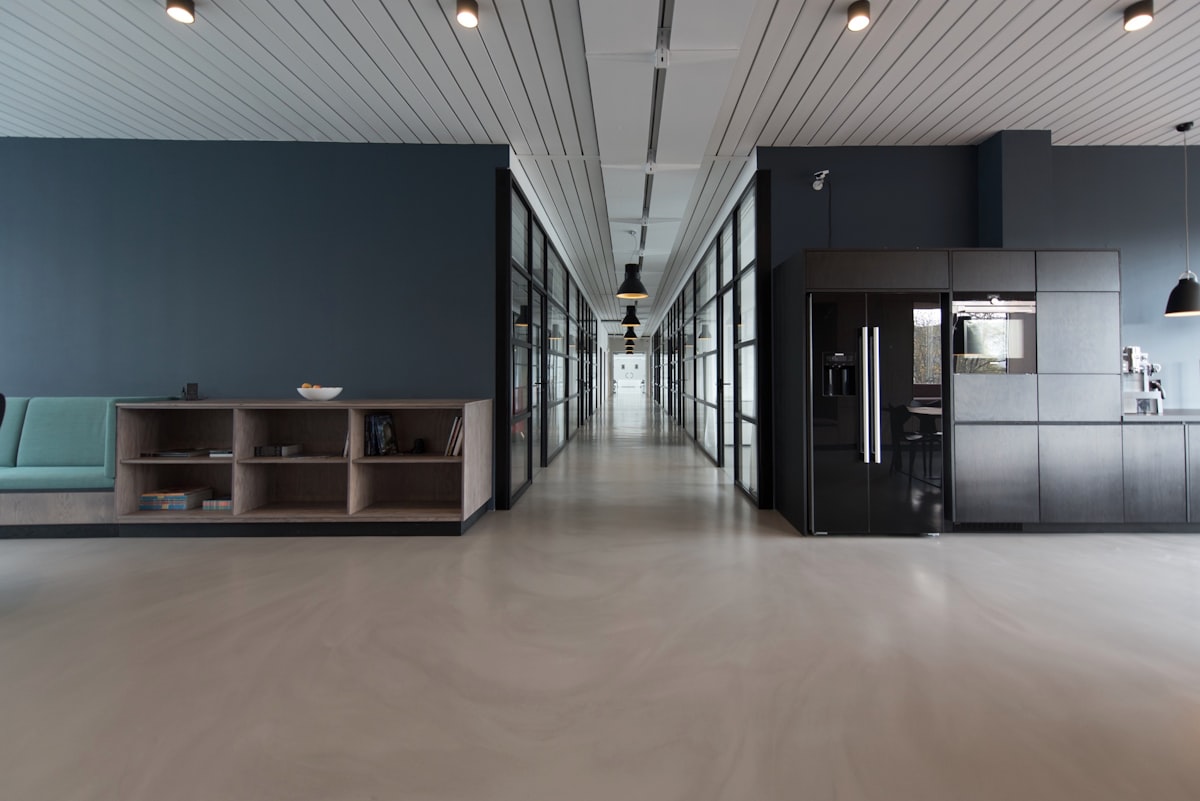
Professional Nightly Corporate Office Detailing & Microfiber Sanitization in Clark County — Mayberry's Maids (702) 474-6243
In commercial real estate procurement across Clark County—from Class A corporate campuses along the Sunset corridor and Summerlin West to flex-office hubs spanning Dean Martin Drive and Spring Valley—the Request for Proposal (RFP) process frequently yields a bewildering spread. When three janitorial contractors submit proposals with comparable scopes of work, and one arrives at forty percent below the median, procurement boards often mistake an operational catastrophe for fiscal prudence.
Commercial janitorial maintenance is governed by fixed labor math, square-footage production rates, and strict chemical physics. When a contractor slashes an estimate below operational viability, they do not discover magical efficiencies; they systematically strip out supervision, labor compliance, chemical dwell times, and filtration standards. Facility managers eventually pay the balance through compromised indoor air quality, premature capital degradation, and heightened premises liability.
The Mojave Factor: Caliche Dust Physics and HVAC Load
Southern Nevada presents an environmental profile distinct from almost any other major commercial market in North America. The Las Vegas basin is saturated with caliche—a hardened concrete-like sedimentary deposit composed of calcium carbonate, fine quartz, and abrasive silica dust. When prevailing winds drive PM10 particulates across the valley, microscopic silica enters commercial thresholds through patron foot traffic, dock bay doors, and building envelope pressure differentials.
Caliche dust is deeply abrasive. When cut-rate contractors deploy cheap synthetic dust mops or unrated residential vacuums, they do not extract this particulate. Instead, the abrasive particles are swept across commercial luxury vinyl tile (LVT), polished concrete, and commercial broadloom, microscopic facets acting like sandpaper that strips away factory finishes and wax coats. Furthermore, inadequate capture aerosolizes fine silica into the building's breathing zone, forcing commercial HVAC economizers to absorb excessive particulate load, choking variable air volume (VAV) terminal boxes and accelerating costly coil-cleaning cycles.
Remediating this requires true industrial-grade equipment. At Mayberry's Maids, routine nightly detailing incorporates True 4-stage HEPA filtration extraction systems certified to capture particulate down to 0.3 microns at 99.97% efficiency. Capturing dry mineral mass at the floor surface prevents abrasive caliche from ever reaching your mechanical air handlers.
The Chemical Myth: The Violation of Disinfectant Contact Dwell Times
One of the quietest casualties of low-bid janitorial work is microbial sanitation. Every EPA-registered hospital-grade disinfectant—whether quaternary ammonium compounds, accelerated hydrogen peroxide, or peracetic acid formulations—relies on an inviolable parameter: wet contact dwell time.
For a broad-spectrum disinfectant to eradicate human coronavirus, MRSA, norovirus, or influenza on common high-touch surfaces (keyless access panels, elevator call buttons, breakroom fixtures, conference room tables), the surface must remain visibly wet with the active solution for the manufacturer's specified period—typically between three and ten continuous minutes.
A janitorial crew allocated only twenty minutes to clean an entire 5,000-square-foot multi-tenant suite cannot honor chemical dwell times. What occurs instead is the 'spray-and-wipe' illusion: an operative misting a surface and instantly drying it with a soiled rag.
This practice does not sanitize; it mechanically picks up pathogen load from one office suite and spreads it directly onto the next desk, driving up employee absenteeism rates and undermining tenant retention across office parks throughout Spring Valley and Dean Martin Drive.
The Shadow Risk: 1099 Subcontracting vs. W-2 Security Protocols
To hit unnaturally low bid figures, non-compliant cleaning operations routinely classify night custodians as 1099 independent contractors, or operate an unvetted 'sub-contractor daisy chain.' This introduces catastrophic premises liability to your facility.
When cleanings occur after hours, custodial personnel hold unescorted access to tenant suites, executive workstations, locked server closets, and sensitive intellectual property. Third-party independent contractors rarely undergo comprehensive local and federal criminal background checks, nor are they bound by workers' compensation protections that insulate property owners from slip-and-fall claims during wet floor operations.
Legitimate commercial office cleaning in Las Vegas requires directly employed, bonded, and fully insured W-2 cleaning technicians. W-2 employment ensures rigorous supervision, continuous bio-hazard handling training, non-disclosure compliance, and dedicated key-card audit trails that keep your commercial assets strictly insulated from liability.
The 5-Minute Nightly Diagnostic Rubric for Facility Managers
Before renewing your existing janitorial contract or executing a low-ball bid, conduct this four-point diagnostic audit inside your building tonight after your current night crew departs:
- The Microfiber Swab Test: Take a fresh, dry white microfiber towel and firmly wipe the top lip of the exit door frames, the supply diffuser vents, and the back housing of computer monitors. If heavy, gritty gray residue transfers immediately, your service provider is surface-buffing rather than executing particulate extraction.
- The Odor Diagnostic: Walk into your restrooms 15 minutes after cleaning. Do you smell heavy artificial masking perfumes (bubblegum or fake pine) covering stale ammonia, or is the air neutral? Heavy fragrance indicates an unwashed floor trap and biological soils left behind by cold-water mops.
- Mop Water Visual Audit: Inspect the janitorial custodial closet. If mop buckets contain dark, murky, opaque liquid, your floors are being rinsed with emulsified graywater, transferring bacteria deep into the porous grout lines of your restrooms and entryways.
- Vacuum Exhaust & Cord Integrity: Inspect the vacuum cleaners left in your janitorial storage. If they are non-HEPA box-store units, or if the exterior exhaust housing is caked in fine dust, your building is being actively re-contaminated with aerosolized silica every single night.
Protecting Your Commercial Asset with Mayberry's Maids
Operational integrity cannot be sustained on compromised math. For over 35 continuous years, Gil and the team at Mayberry's Maids have set the benchmark for commercial office janitorial and routine nightly detailing from our central hub in NV 89103, protecting Class A office environments, engineering labs, and commercial headquarters throughout Clark County.
We invite facility executives, property managers, and procurement directors to step beyond the uncertainty of cut-rate contractors. Contact Gil directly at (702) 474-6243 or email sales@wecleanlasvegas.com to schedule a complimentary 15-minute on-site engineering walkthrough. We will benchmark your facility's square footage, review your current scope against concrete operational metrics, and demonstrate what true commercial detailing delivers for your enterprise.

Comments
Post a Comment